From Time & Space Complexity to Trees, Graphs, Dynamic Programming, 350+ LeetCode Questions & Low-Level System Design (LLD).










Get Syllabus, Fees & Batch Timings
Over 2,300+ CJC Graduates are working as Software Development Engineers (SDE), System Architects & Backend Developers across Pune, Bengaluru, Hyderabad & Mumbai.








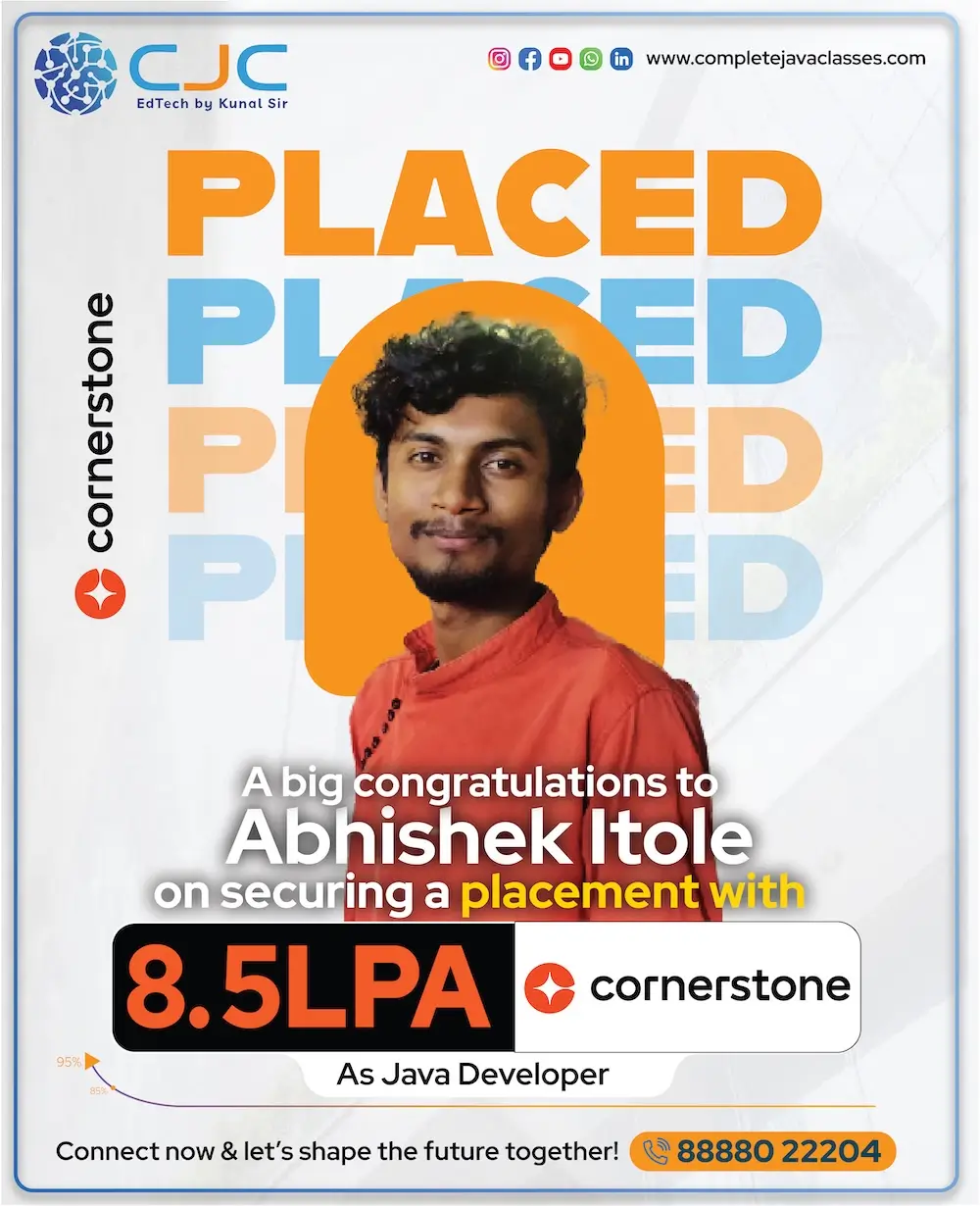
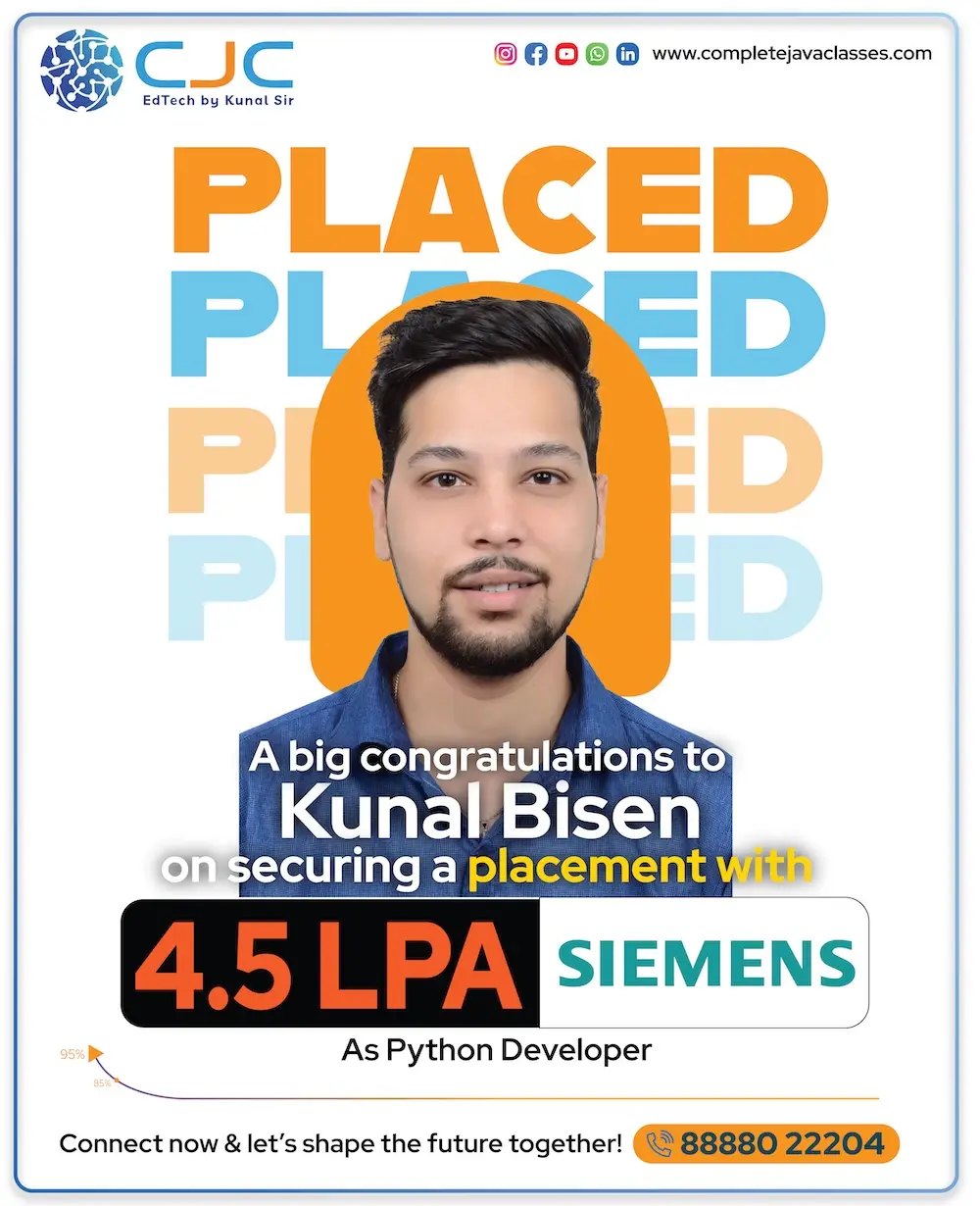
Watch how freshers and engineering students solved 350+ LeetCode problems and cracked 8.5 LPA to 18 LPA product packages.


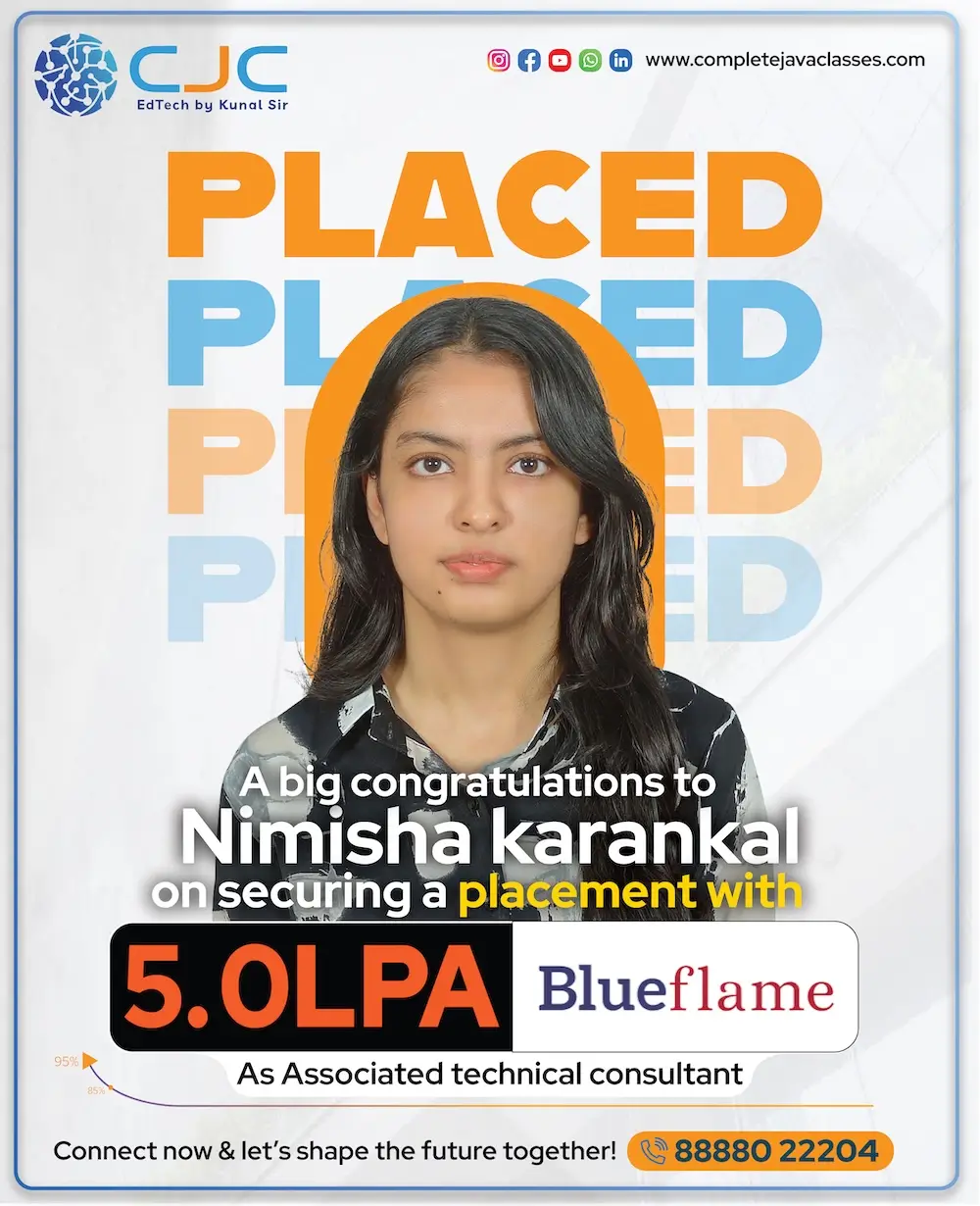
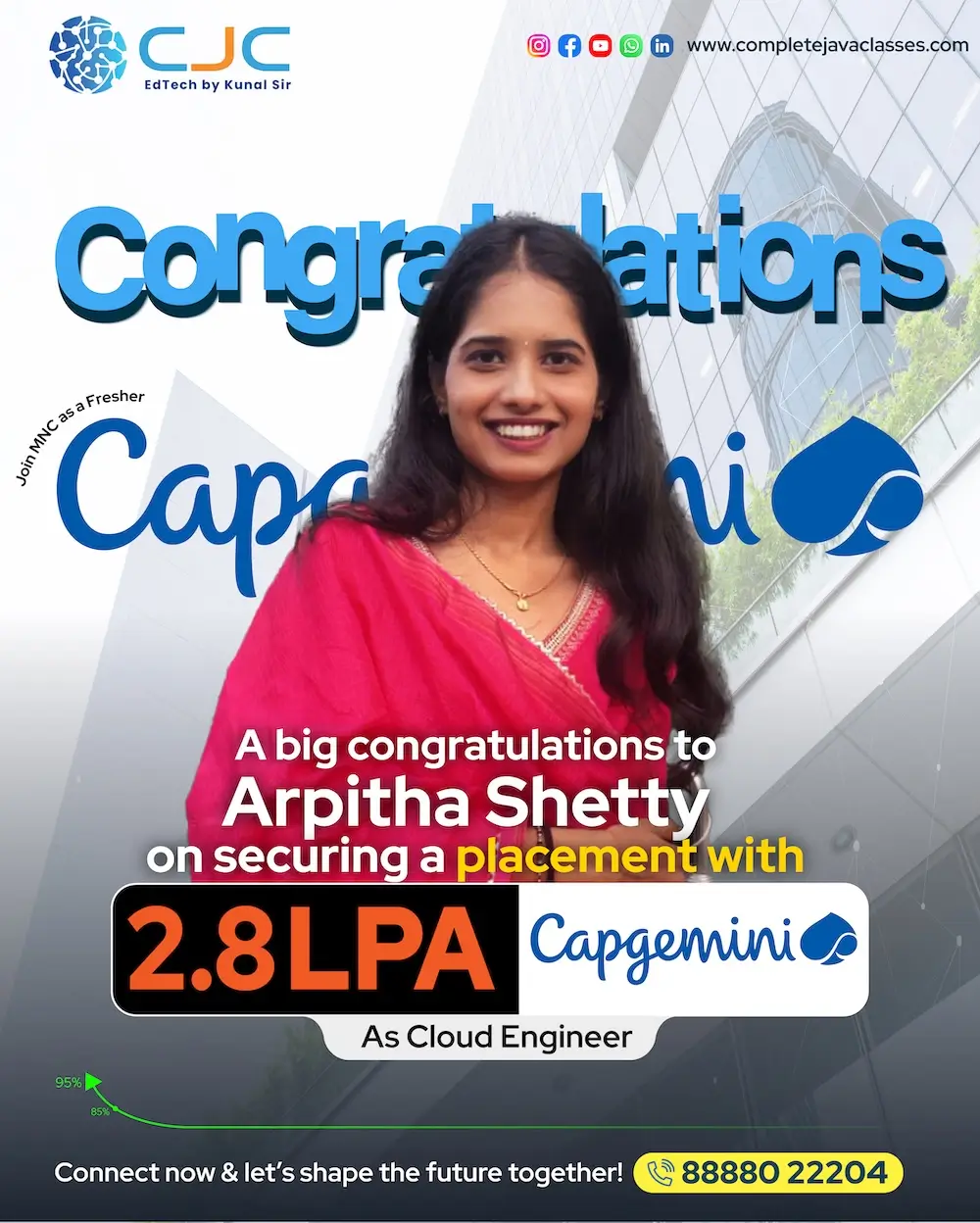
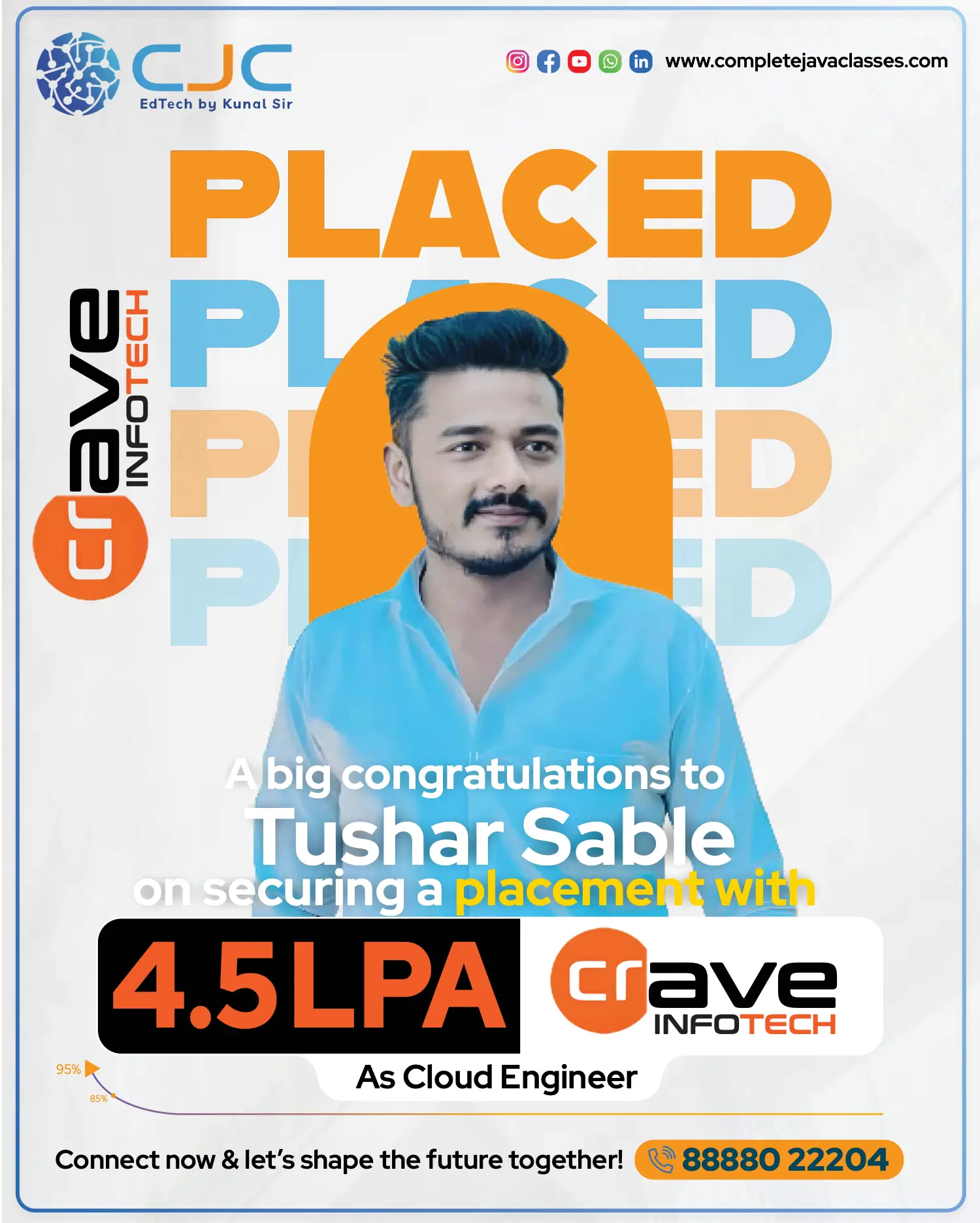
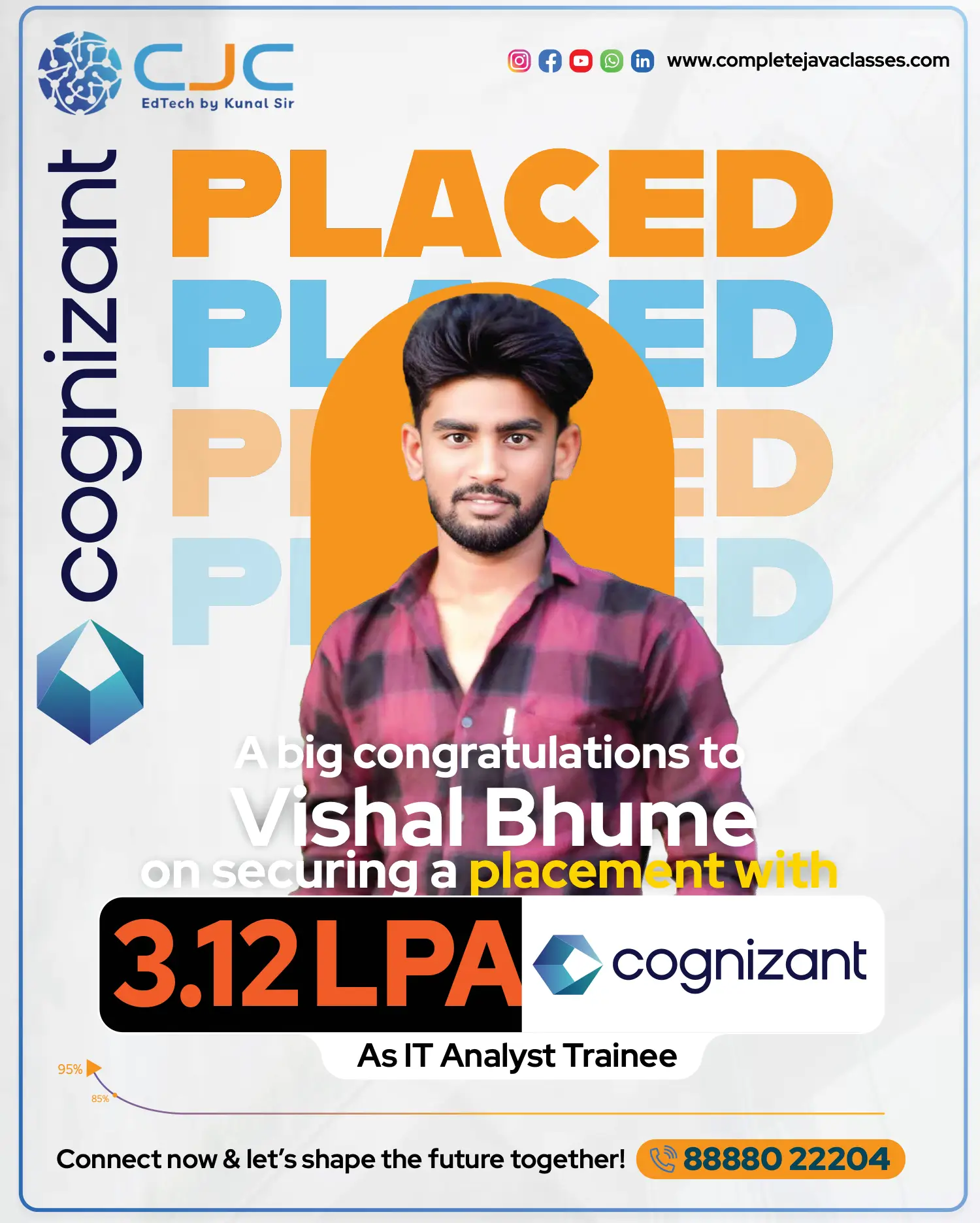

Mastering algorithmic problem-solving is the single biggest differentiator between a 3.5 LPA service company offer and a 12+ LPA product company role.
BE, BTech, BCA, MCA students aiming to crack on-campus and off-campus coding rounds at Amazon, Microsoft, TCS Digital, and product startups.
Engineers currently in service IT firms wanting to make the quantum leap into Tier-1 product organizations and unicorns with 2x–3x salary packages.

Developers looking to master Low-Level Design (LLD), concurrency, thread-safe data structures, and architectural scalability patterns.
Candidates with career breaks. Strong algorithmic problem-solving ability in live technical machine tests overrides gap concerns in product company hiring.
Design and implement high-performance, concurrent, and thread-safe software systems from scratch in Java.
Implemented high-concurrency memory cache supporting O(1) reads and writes, eviction policies, doubly linked list rebalancing, and fine-grained ReentrantReadWriteLock synchronization.
Designed low-latency routing engine for ride-hailing networks using Quad-Trees for spatial indexing, Min-Heaps for driver matching, and optimized Dijkstra / A* search for route finding.
Constructed production API gateway rate limiter supporting Sliding Window Log and Token Bucket algorithms with sub-millisecond atomic decrement latencies under 50,000 req/sec load.
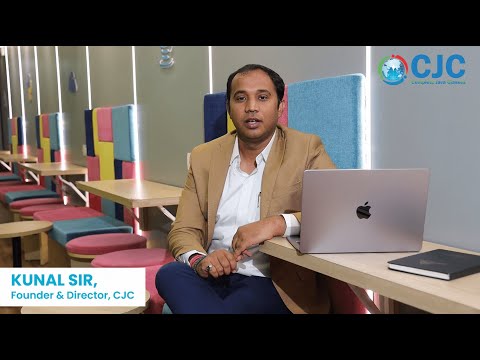
Master 350+ LeetCode problems, mathematical intuition, whiteboarding, and Low-Level Design with personal mentorship from Kunal Sonu Sir.
Every algorithmic pattern (Sliding Window, Two Pointers, Monotonic Stack, Backtracking, DP) is coded live in class with time & space complexity trade-offs.

No rote memorization. We develop visual mathematical intuition for recursive call stacks, graph states, state machines, and memoization tables.
Understand the internals of java.util: HashMap resizing, Red-Black Trees in TreeMap, ConcurrentHashMap CAS operations, and JVM GC behavior under memory loads.

Learn Object-Oriented design patterns (Factory, Observer, Strategy, Decorator) and solve classic LLD interview problems (Parking Lot, Tic-Tac-Toe, Elevator System).
Simulate high-pressure HackerRank, Codility, and Google FooBar style coding assessments with edge-case test suites and hidden constraints.

Direct technical mentorship and 1-on-1 resume reviews by Mr. Kunal Sonu with 15+ years of enterprise engineering and placement leadership.

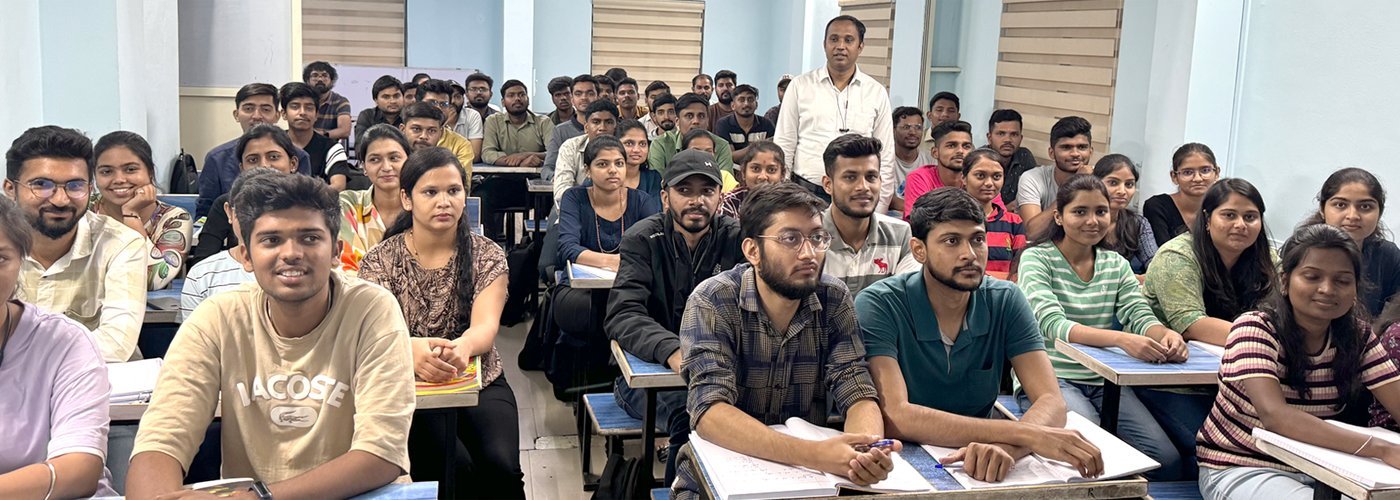
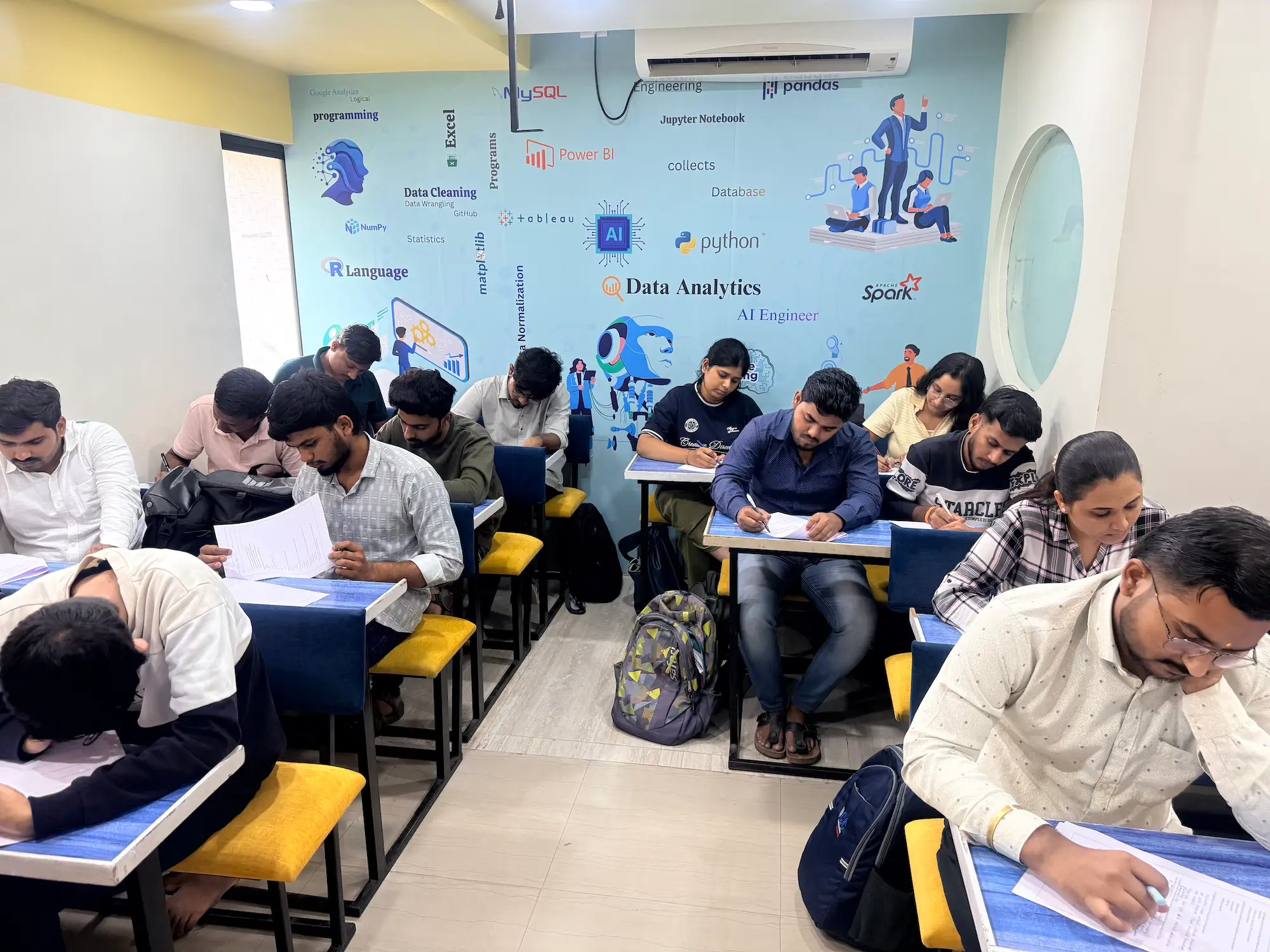
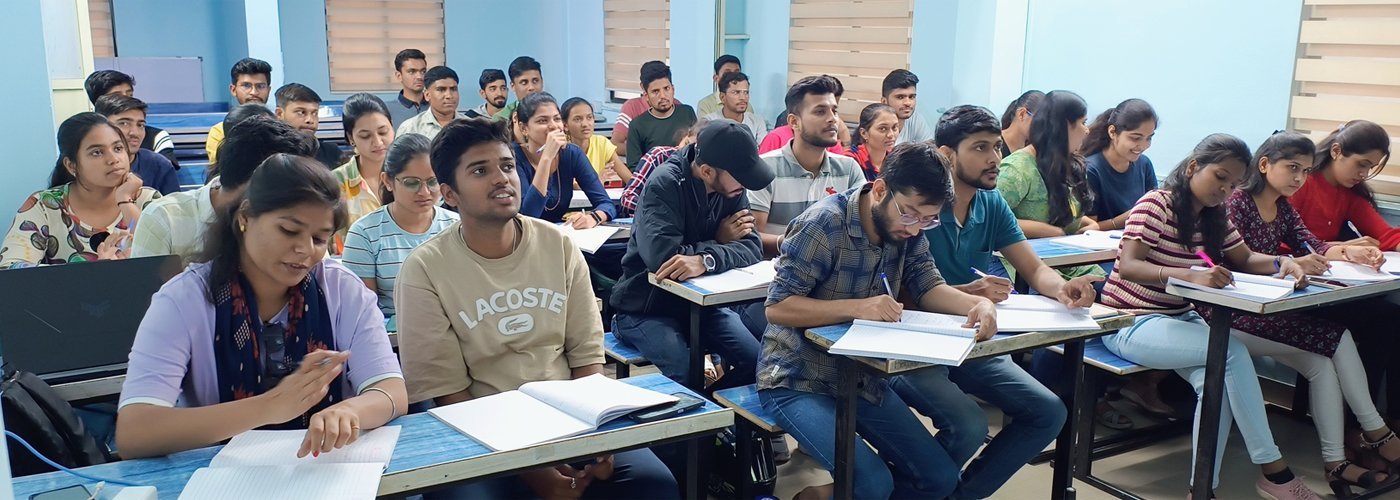
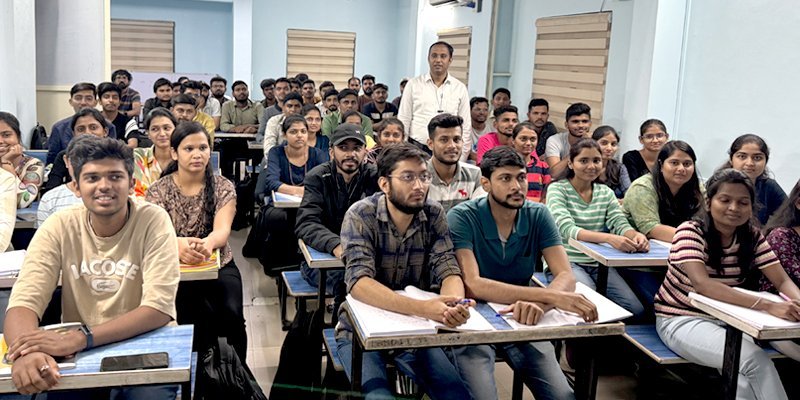
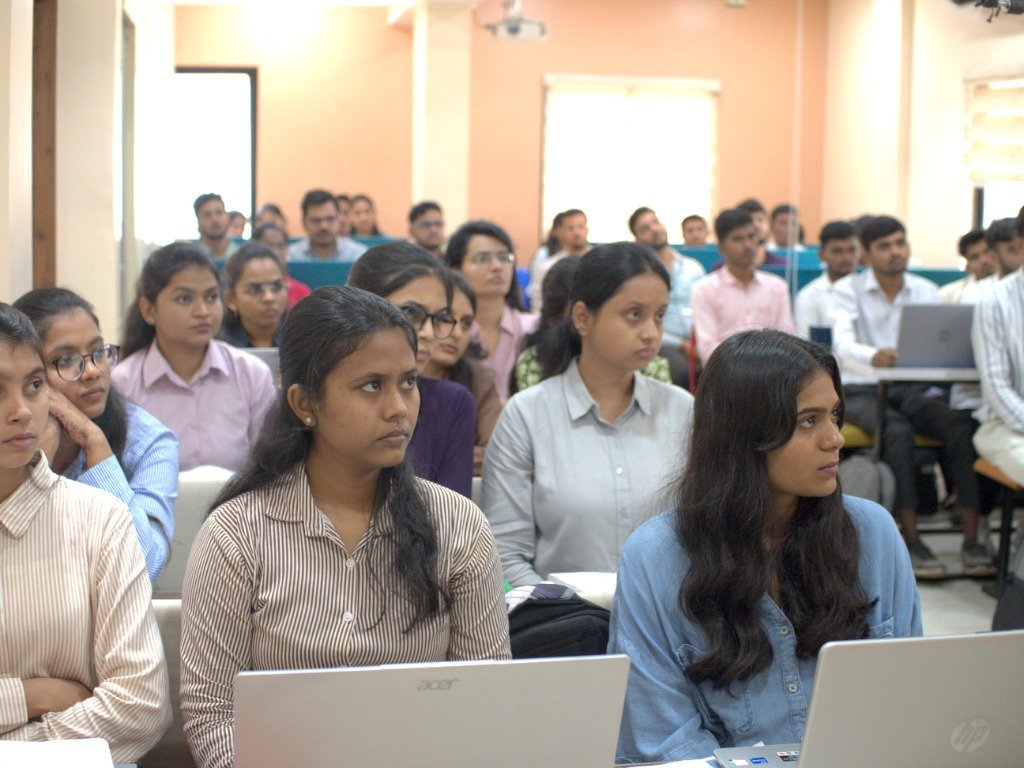
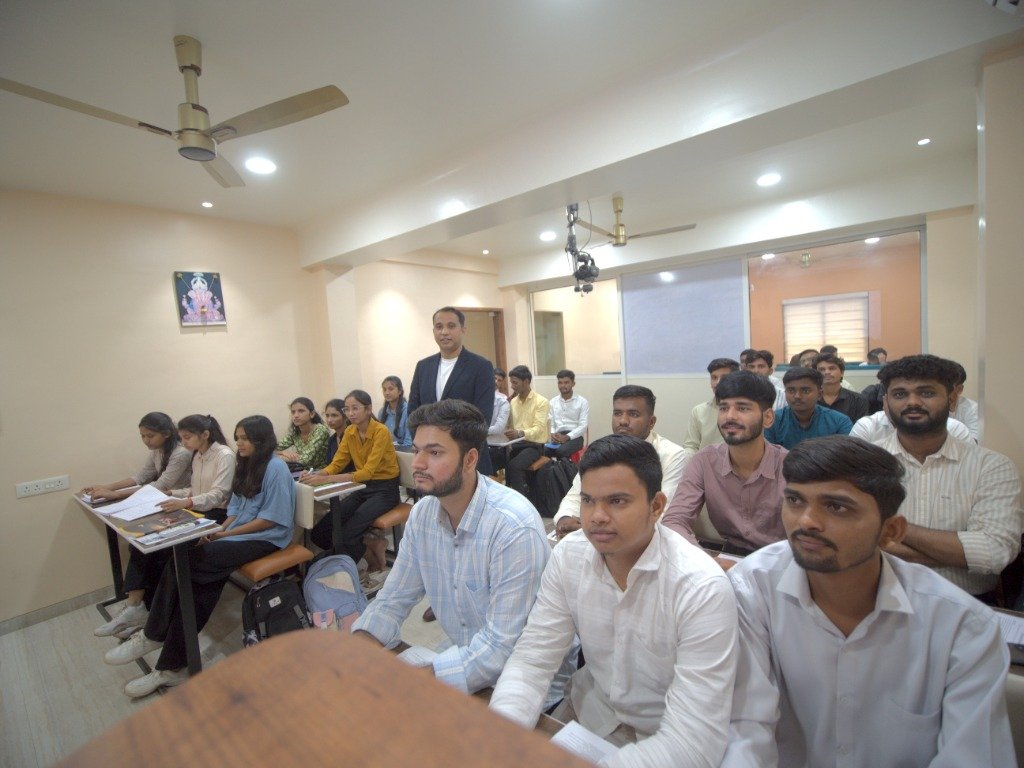
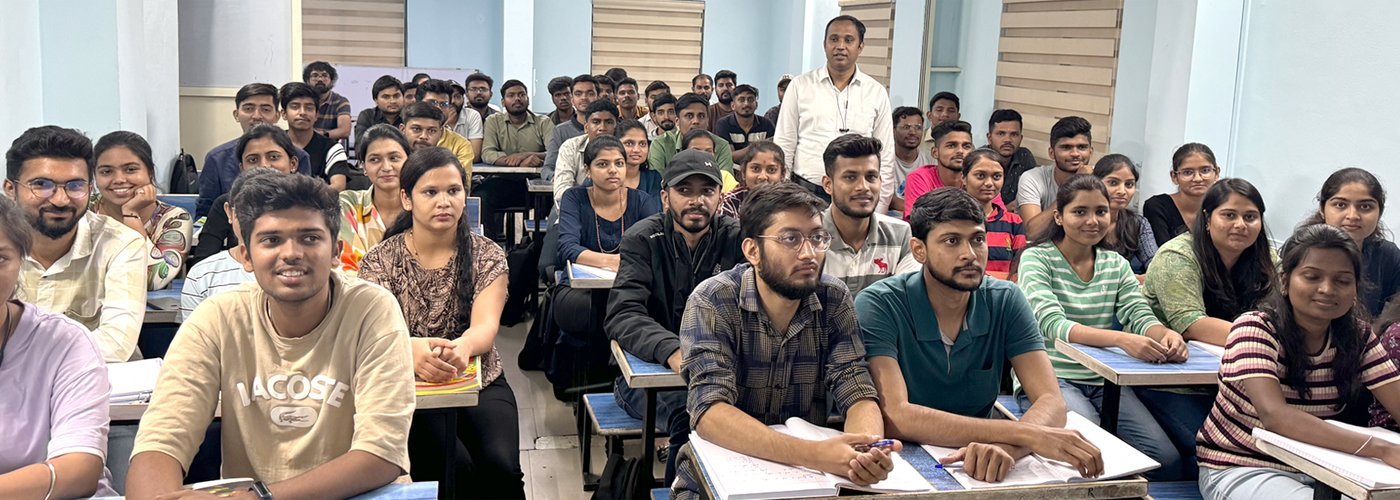
Real classrooms. Live mentorship. Practical learning.
Click each module below to view all topics, enterprise project milestones, and hands-on exercises covered in class.
Analyze any algorithm's efficiency with Big-O, Theta, and Omega notations. Understand recurrence relations, Master Theorem, and Java Heap/Stack memory footprint.
Solve 60+ fundamental and advanced array/string problems. Master Prefix Sum, Kadane's maximum subarray, Dutch National Flag, and variable-size sliding windows.
Master pointer manipulation in Singly/Doubly Linked Lists, Monotonic Stack patterns (Next Greater Element), Sliding Window Maximum using Deque, and In-Memory LRU Cache design.
Solve 70+ tree problems. Master Tree traversals (BFS, DFS, Morris Traversal), Lowest Common Ancestor, Tree Serialization, Trie prefix trees, and Priority Queues.
Master Graph representations (Adjacency Matrix/List), BFS/DFS cycles, Topological Sorting (Kahn's algorithm), Disjoint Set Union (DSU), and Shortest Path algorithms.
Demystify Dynamic Programming. Master top-down memoization, bottom-up tabulation, space optimization, and classic patterns (Knapsack, LCS, LIS, Matrix Chain Multiplication).
Bridge the gap between raw DSA and real-world system design. Master SOLID principles, design patterns (Singleton, Factory, Observer, Strategy) and solve full LLD problems.
Includes day-by-day 350+ LeetCode question lists, algorithmic pattern cheat sheets, and LLD class diagram templates.
Join our classroom batches at Karvenagar or Akurdi, or attend live interactive online sessions.
Ideal for 2nd and 3rd year engineering students aiming to master Core Java, Arrays, Linked Lists, Trees, and basic LeetCode patterns.
Our flagship intensive program covering 350+ LeetCode problems, DP, Graphs, Low-Level System Design, and 100% placement support for Tier-1 companies.
Saturday & Sunday intensive live sessions designed specifically for working software engineers preparing for SDE-1 / SDE-2 product company switch.
Everything you need to know about CJC's Data Structures & Algorithms (DSA) in Java & System Design Program.

Get clear answers about LeetCode problem solving, System Design, placements and fees.
Java is the most widely accepted language in Tier-1 product companies and enterprise MNCs. Its strong static typing prevents common runtime bugs, its built-in Collections framework (HashMap, PriorityQueue, ArrayDeque) is standardized across tech interviews, and you never have to deal with manual pointer segmentation faults.
You will solve 350+ curated problems across LeetCode, HackerRank, and Codeforces. We focus on identifying recurring patterns (Two Pointers, Sliding Window, Monotonic Stack, Backtracking, DFS/BFS, Dijkstra, DSU, and 1D/2D Dynamic Programming) so you can solve unseen questions in interviews.
Yes! The curriculum is tailored specifically for Tier-1 product companies like Amazon, Microsoft, Adobe, Goldman Sachs, and top tech startups. We cover rigorous time & space complexity trade-offs, edge-case analysis, and live whiteboard problem solving.
Yes! Product companies always test Low-Level Design (LLD) in round 2 or 3. We teach SOLID design principles, GoF design patterns (Factory, Strategy, Observer, Decorator), and solve classic LLD problems like Parking Lot, Splitwise, and In-Memory Caches.
We start from zero prerequisites with step-by-step logic building and visual whiteboard proofs. In product engineering hiring, your ability to crack live algorithmic rounds and write clean code overrides educational branch or gap considerations.
Every Saturday, students undergo timed coding contests on our assessment portal, followed by 1-on-1 mock technical interviews where mentors evaluate your thinking process, communication, time complexity analysis, and edge-case handling.